
The Impact of Missing Teeth-All You Need To Know
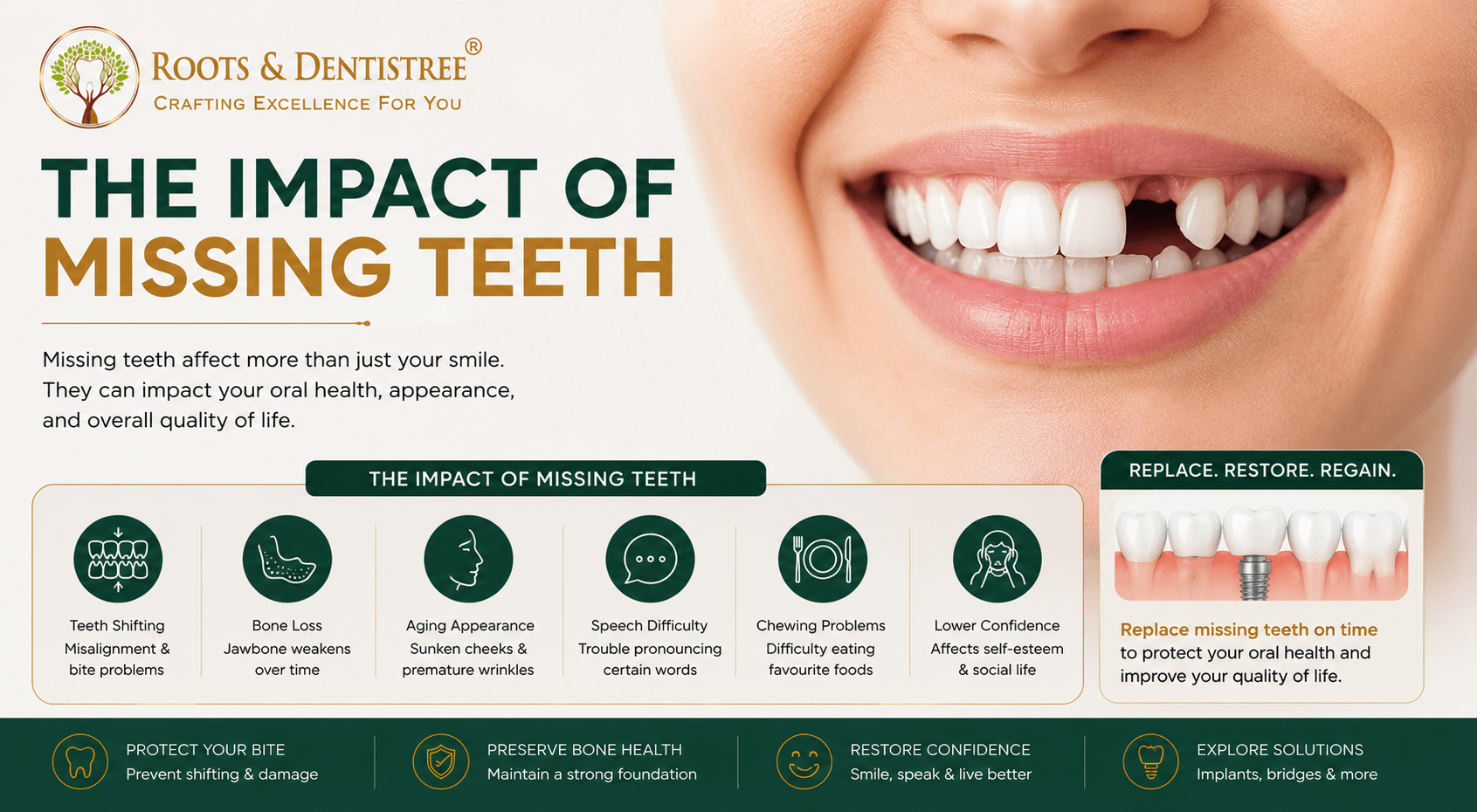
Missing teeth may seem like a minor concern initially. However, tooth loss can have far-reaching effects on your oral health, appearance, and overall quality of life. While many people focus on the visible gap in their smile, the consequences often extend far beyond aesthetics.
At ROOTS & DENTISTREE, we frequently educate patients about the importance of replacing missing teeth at the right time. Therefore, understanding the impact of tooth loss and the available replacement options can help you make informed decisions about your long-term oral health.
Why Missing Teeth Should Never Be Ignored
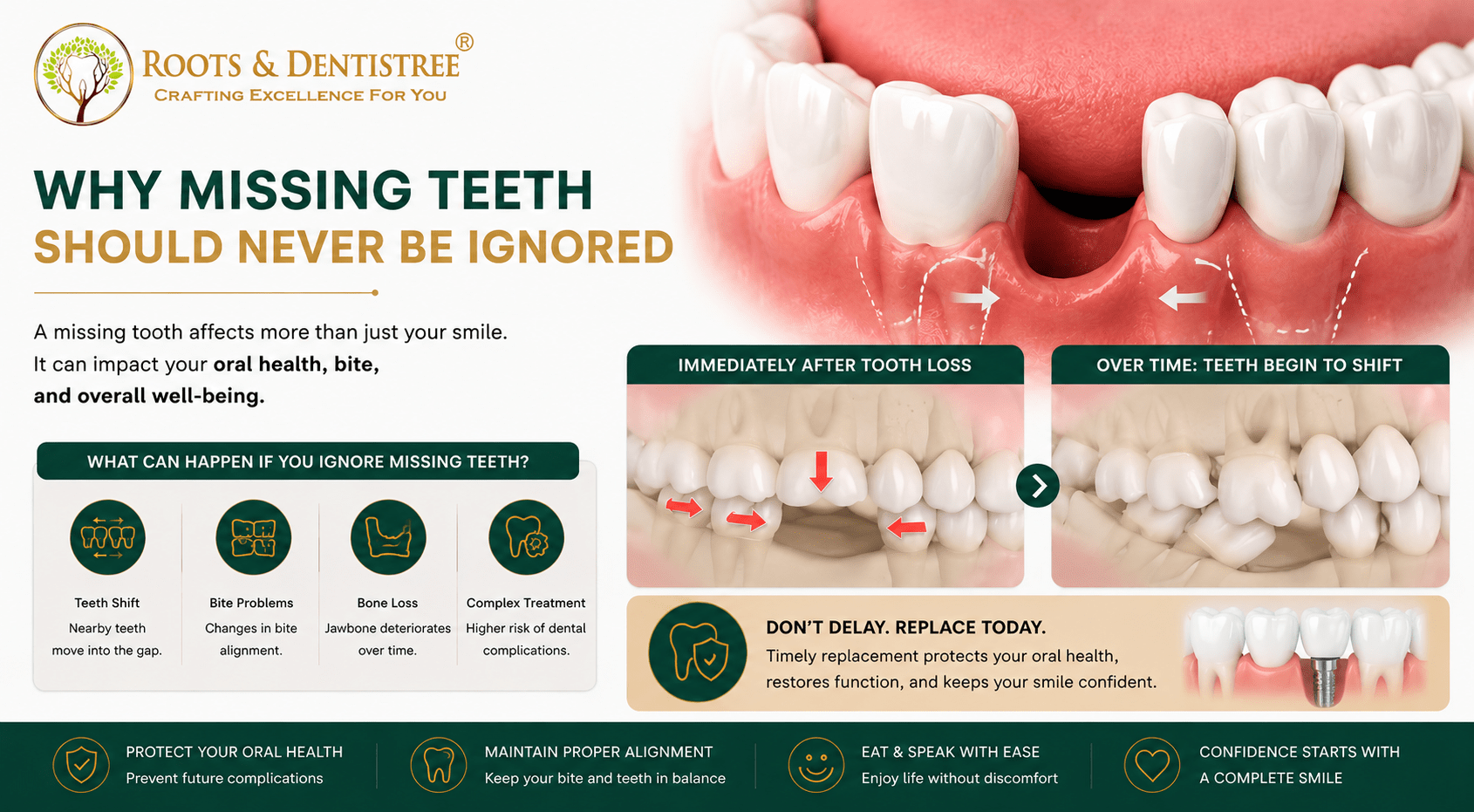
Teeth work together as a functional unit. Consequently, the loss of even a single tooth can disrupt the balance of your entire mouth.
Initially, the effects may appear insignificant. Nevertheless, over time, neighboring teeth begin to shift into the empty space. As a result, bite alignment changes and chewing efficiency may gradually decline.
Furthermore, untreated tooth loss can increase the risk of additional dental complications, making future treatment more complex.
The Effect of Missing Teeth on Oral Health
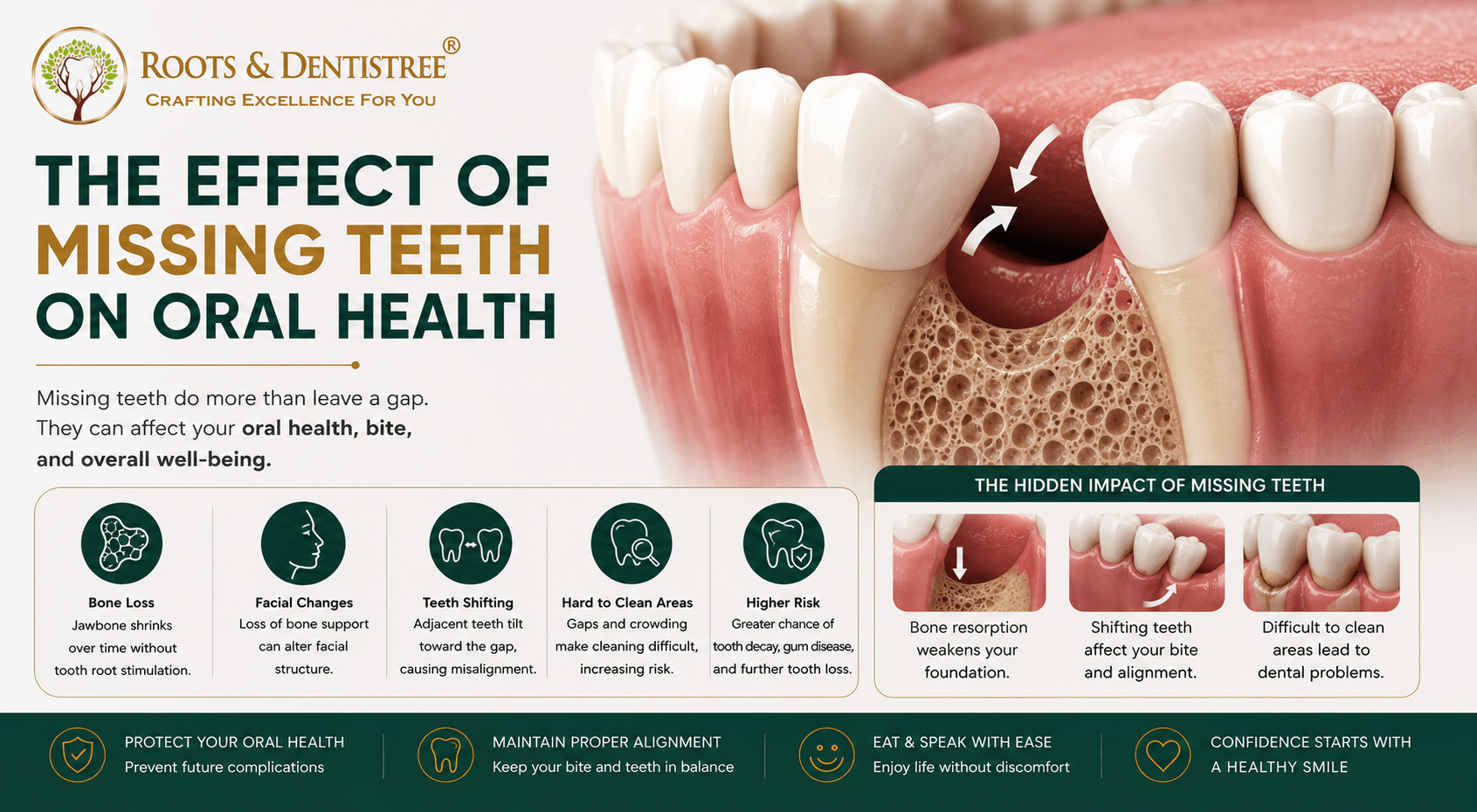
One of the most significant consequences of tooth loss is bone resorption. Since the jawbone relies on stimulation from tooth roots, the absence of that stimulation causes the bone to shrink gradually.
Consequently, the surrounding tissues lose support and facial structures may begin to change. In addition, adjacent teeth may tilt toward the empty space, thereby creating areas that are difficult to clean.
Over time, these changes can increase the likelihood of tooth decay, gum disease, and further tooth loss.
How Missing Teeth Affect Your Appearance
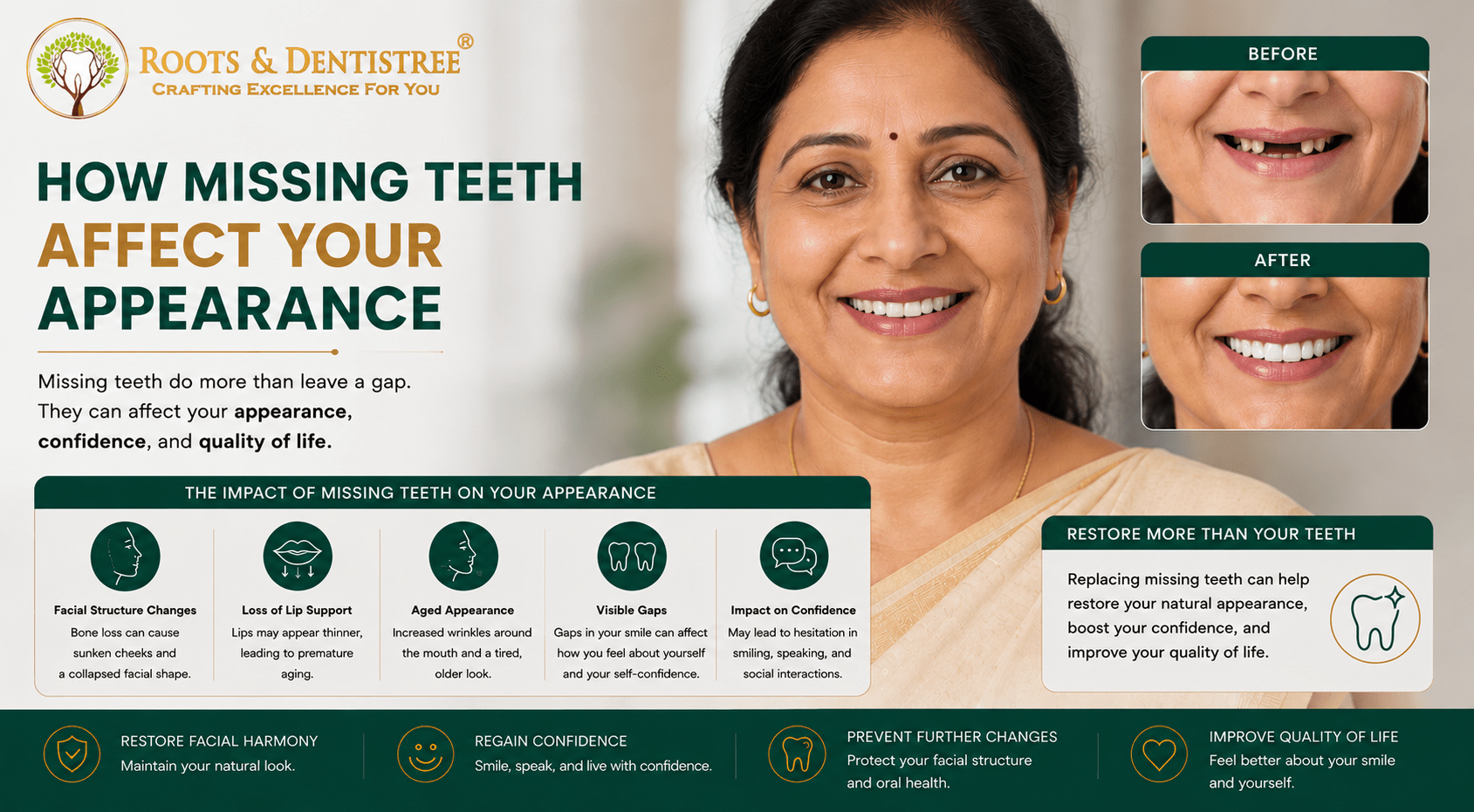
A complete smile contributes significantly to facial harmony and self-confidence. Therefore, missing teeth can affect not only how you look but also how you feel about yourself.
As bone loss progresses, the cheeks may appear sunken and the lips may lose support. Consequently, individuals often develop a prematurely aged appearance.
Moreover, visible gaps can make some people hesitant to smile, speak, or participate confidently in social situations.
The Impact on Chewing and Nutrition
Teeth play a crucial role in breaking down food efficiently. However, when one or more teeth are missing, chewing becomes less effective.
As a result, patients may avoid certain foods such as fruits, vegetables, nuts, or proteins that require proper chewing. Subsequently, dietary choices become limited, potentially affecting overall nutrition and health.
Therefore, replacing missing teeth is important not only for oral function but also for maintaining a balanced diet.
The Effect on Speech
Many people are surprised to learn that teeth contribute significantly to speech clarity.
When teeth are missing, certain sounds may become difficult to pronounce correctly. Consequently, speech patterns may change, particularly when front teeth are involved.
Although some individuals adapt over time, proper tooth replacement often restores natural speech and confidence.
Replacement Options for Missing Teeth
Modern dentistry offers several effective solutions for replacing missing teeth. Therefore, the most suitable option depends on factors such as oral health, bone availability, budget, and long-term goals.
Dental Implants
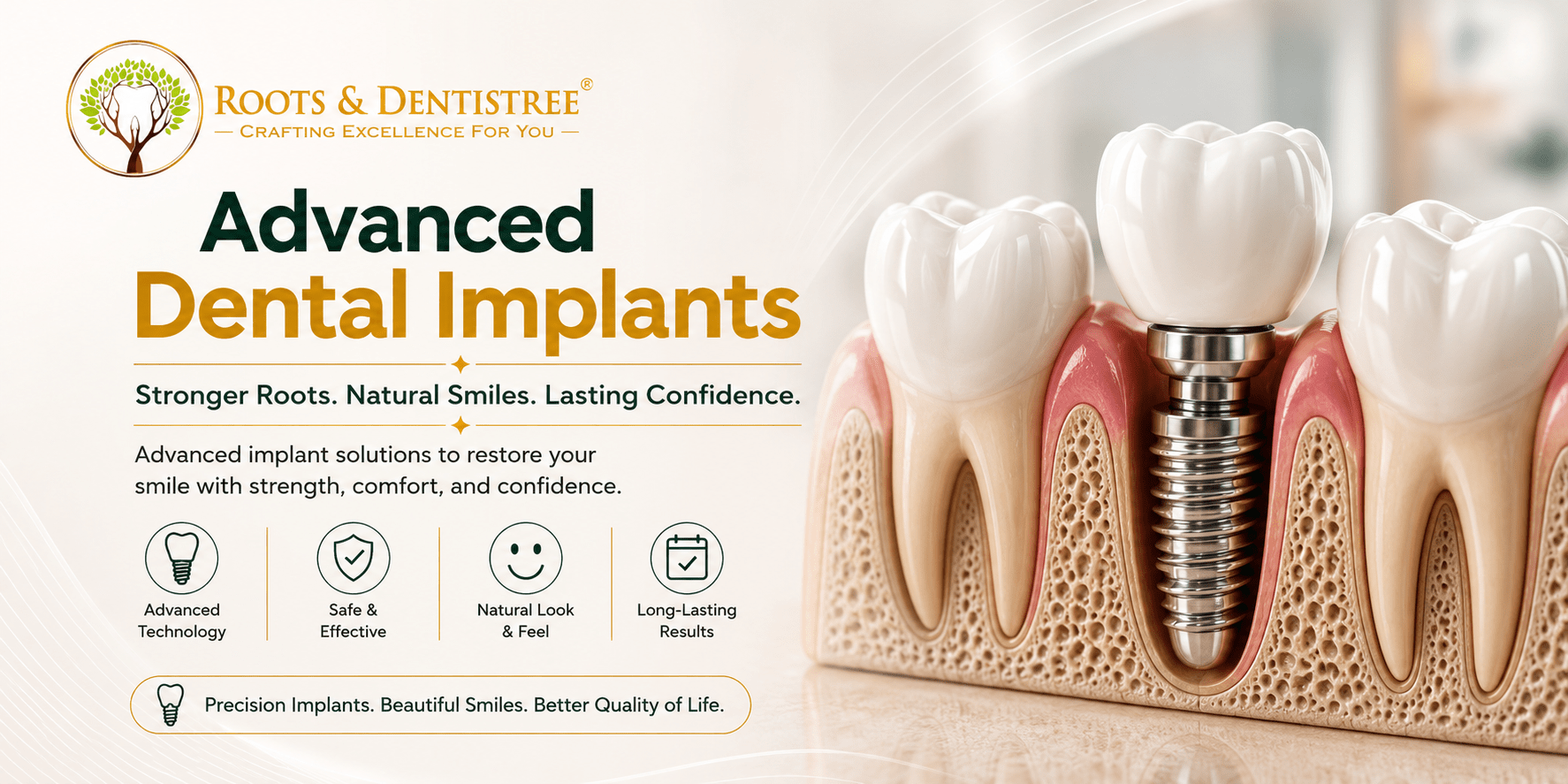
Dental implants are widely regarded as the gold standard for tooth replacement. Unlike traditional alternatives, implants replace both the visible tooth and its root.
A titanium implant is placed within the jawbone, where it integrates naturally over time. Subsequently, a custom-made crown is attached to restore function and appearance.
Because implants stimulate the jawbone, they help prevent bone loss while maintaining facial structure. In addition, they offer exceptional stability and longevity.
As a result, dental implants provide the closest experience to having natural teeth.
Dental Bridges
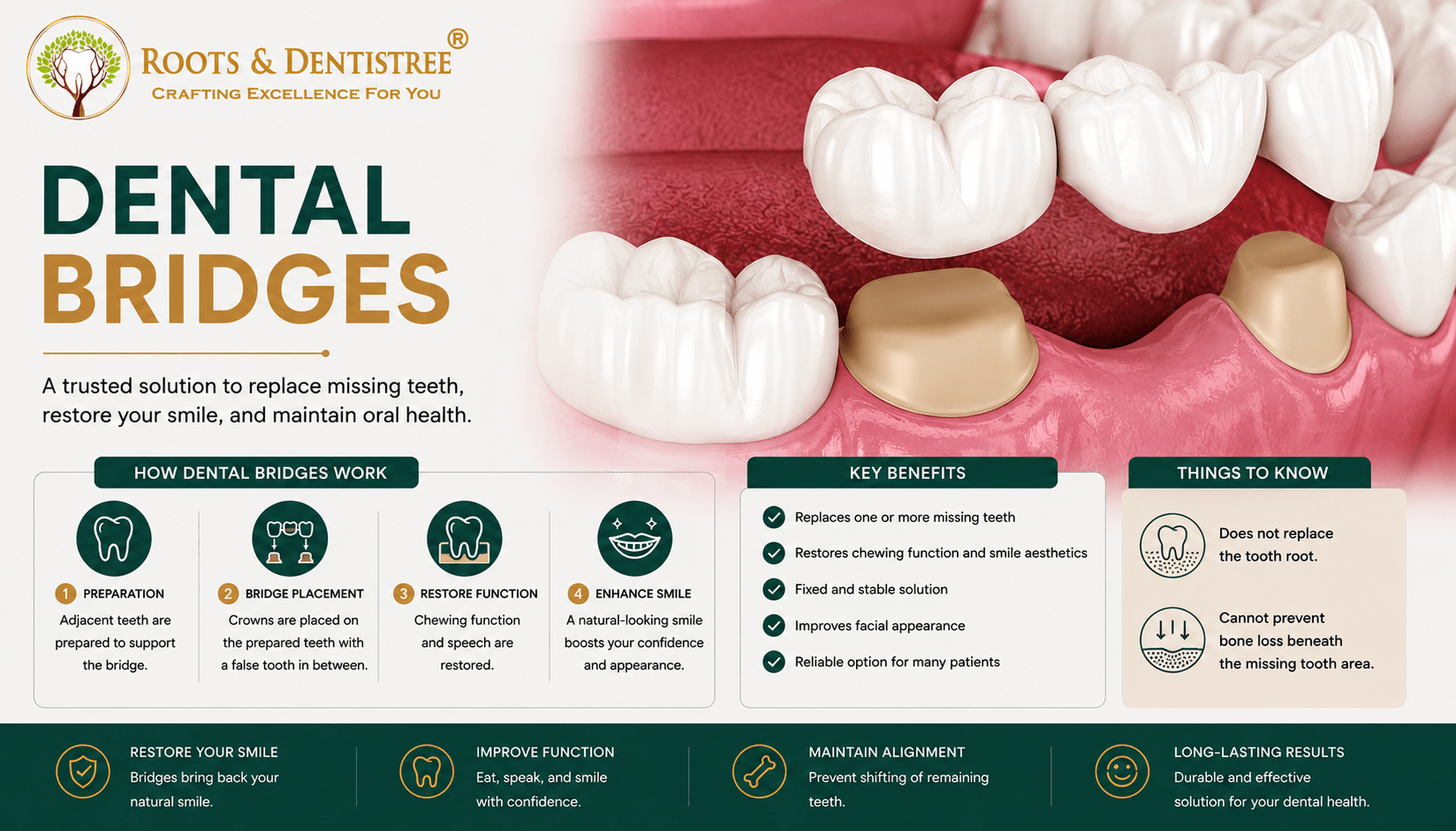
Dental bridges are another effective solution for replacing one or more missing teeth.
This treatment involves placing crowns on adjacent teeth to support an artificial tooth in the gap. Consequently, chewing function and smile aesthetics are restored.
While bridges provide a fixed solution, they do not replace the tooth root. Therefore, they cannot prevent bone loss beneath the missing tooth area.
Nevertheless, bridges remain a reliable option for many patients.
Dentures
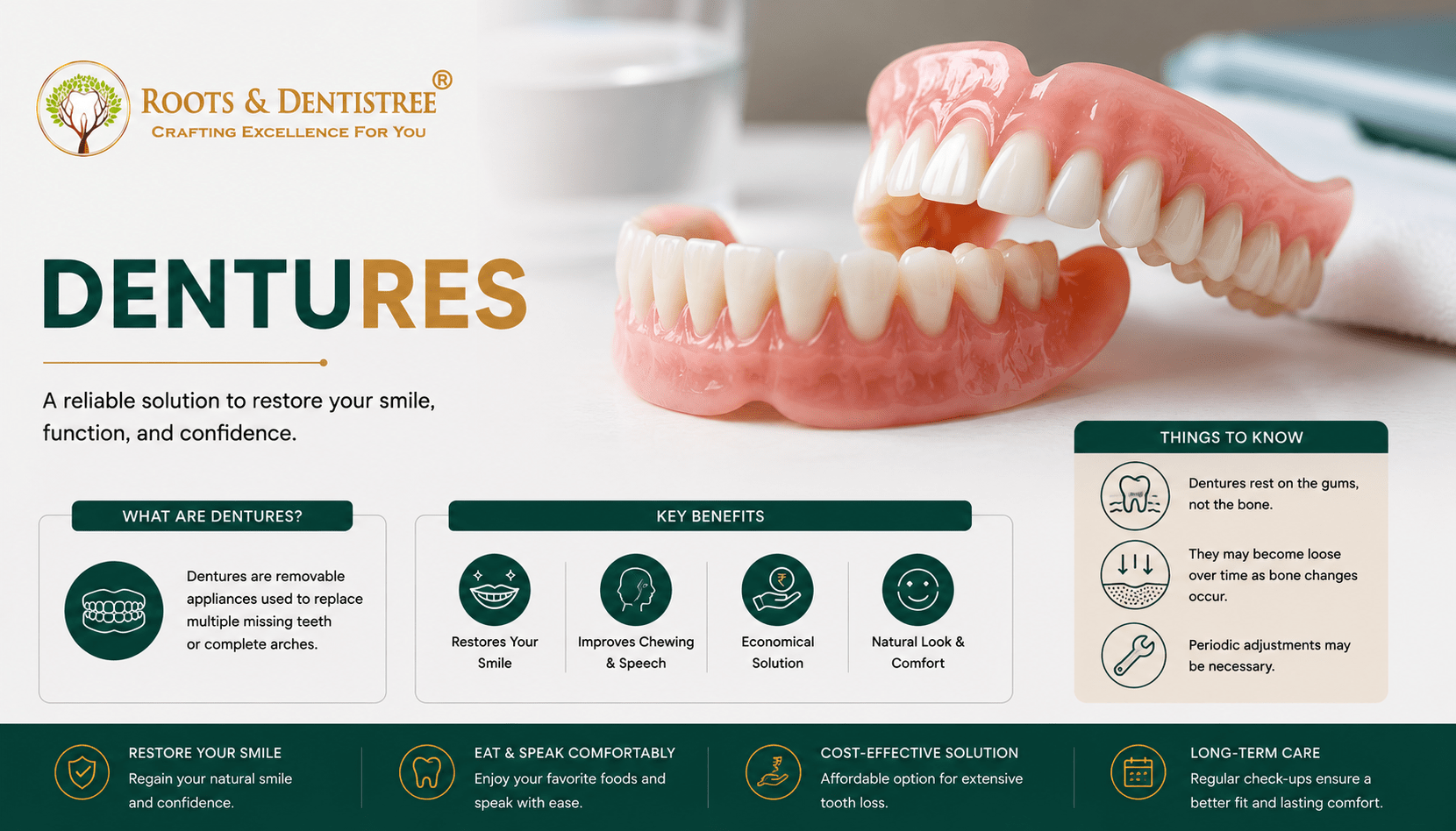
Dentures have been used successfully for decades to replace multiple missing teeth or complete arches.
Modern dentures are more comfortable and natural-looking than ever before. Furthermore, they offer an economical solution for patients with extensive tooth loss.
However, because dentures rest on the gums rather than integrating with the bone, they may become loose over time as bone changes occur.
Consequently, periodic adjustments may be necessary.
Implant-Supported Dentures
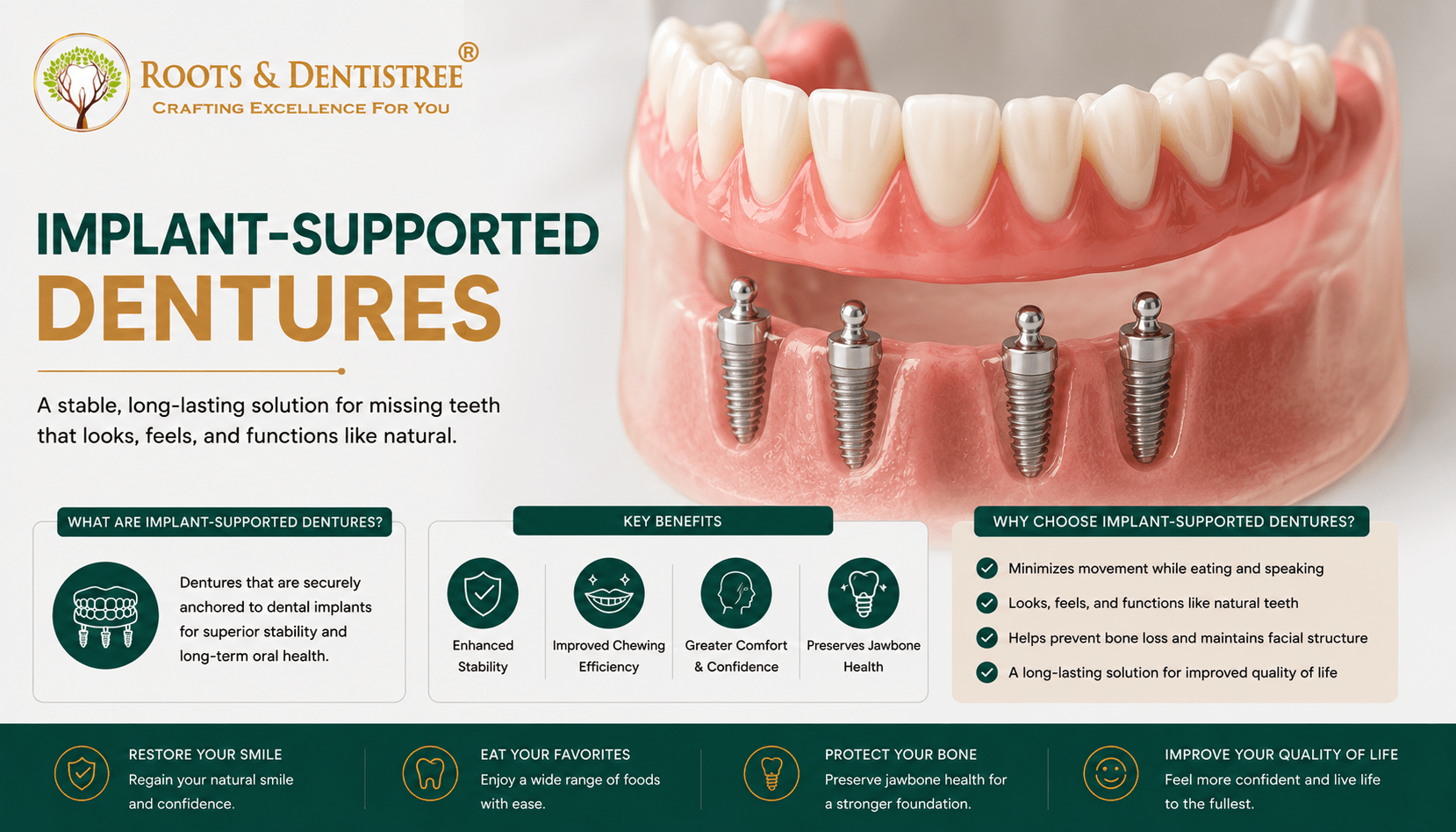
For patients seeking greater stability, implant-supported dentures provide an advanced alternative.
Instead of relying solely on gum support, these dentures are anchored to strategically placed implants. As a result, they offer improved comfort, enhanced chewing efficiency, and greater confidence.
Moreover, implant-supported dentures help preserve jawbone health while minimizing movement during eating and speaking.
Which Tooth Replacement Option Is Best?
There is no single solution that suits everyone. Therefore, the best treatment depends on your clinical condition, expectations, and budget.
Dental implants generally offer the most comprehensive benefits because they replace both the tooth and its supporting root. However, bridges and dentures remain valuable solutions in appropriate situations.
Consequently, a thorough consultation is essential before selecting a treatment option.
Why Early Replacement of Missing Teeth Matters?
Many patients delay treatment because they adapt to the missing tooth. Nevertheless, postponing replacement often leads to additional complications.
As neighboring teeth shift and bone loss progresses, treatment may become more extensive and costly. Therefore, replacing missing teeth promptly helps preserve oral structures and simplifies future care.
In addition, early intervention often produces more predictable and aesthetically pleasing outcomes.
Expert Advice from ROOTS & DENTISTREE
At ROOTS & DENTISTREE, our philosophy centers on preserving oral health while restoring confidence and function. Through advanced diagnostics and personalized treatment planning, we help patients choose the most appropriate replacement option for their unique needs.
Whether you require a single tooth replacement or a complete smile rehabilitation, our goal is to provide long-lasting solutions that look, feel, and function naturally.
Frequently Asked Questions
Yes. Even a single missing tooth can affect chewing, bite alignment, and bone health over time.
Dental implants are generally considered the most advanced and long-lasting solution.
Yes. Once a tooth is lost, the surrounding jawbone gradually begins to shrink due to lack of stimulation.
Modern dentures remain an effective and economical solution, particularly for multiple missing teeth.
Ideally, replacement should be planned as soon as possible to prevent bone loss and tooth movement.