
Dental Implants: What to Know?
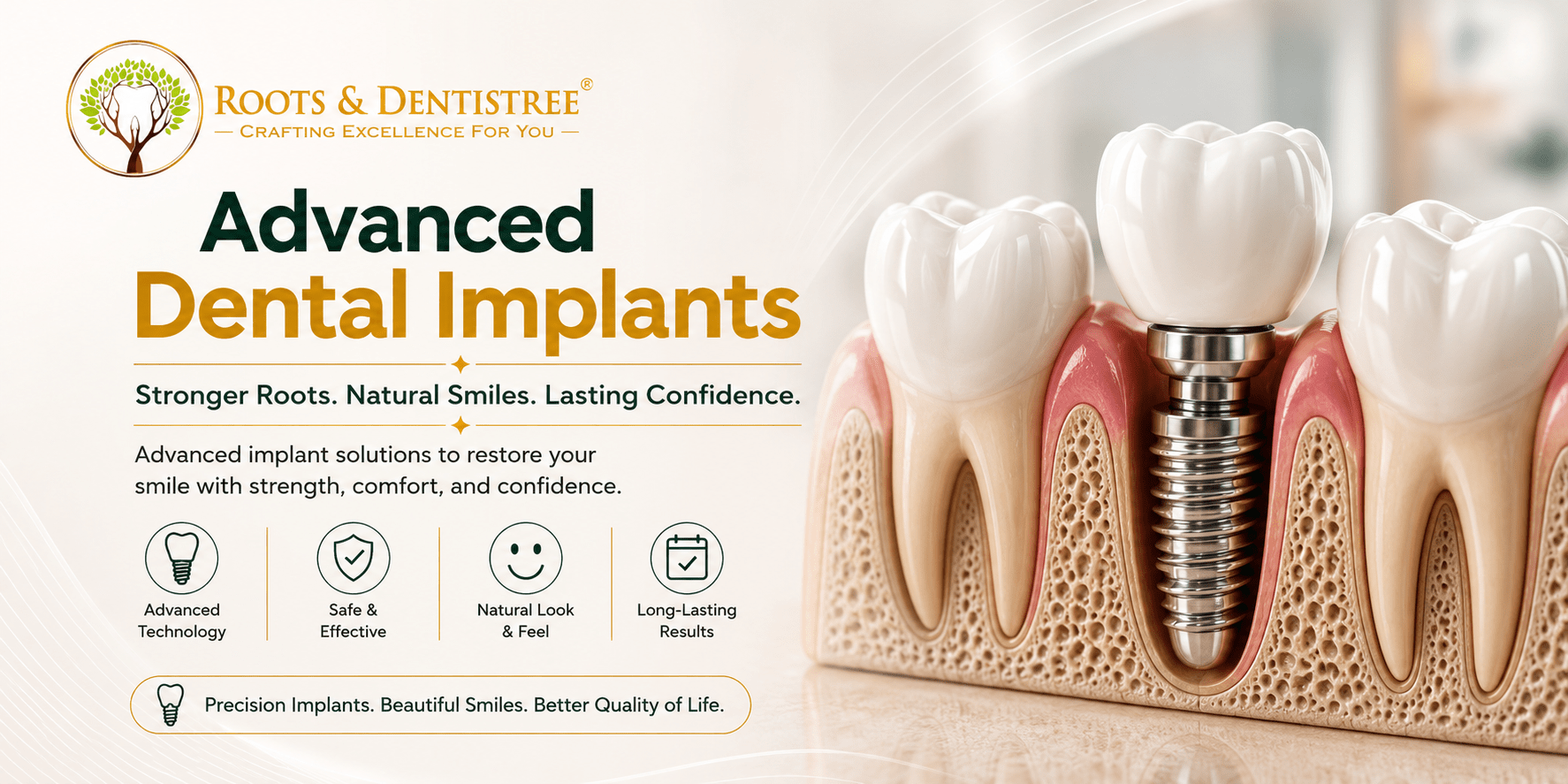
Losing a tooth can affect much more than your smile. In addition to compromising aesthetics, missing teeth can interfere with chewing, speech, and overall confidence. Fortunately, modern dentistry offers a highly predictable and long-lasting solution. Dental Implants have revolutionized tooth replacement by providing a treatment option that closely resembles natural teeth in both appearance and function.
At ROOTS & DENTISTREE, advanced implant treatments are performed by Dr. Chitra Chakravarthy and Dr. Guru Charan, Oral & Maxillofacial Surgeons and Implantologists, along with Dr. Srinivas Reddy, Prosthodontist, ensuring comprehensive care from implant placement to final restoration.
What Are Dental Implants?
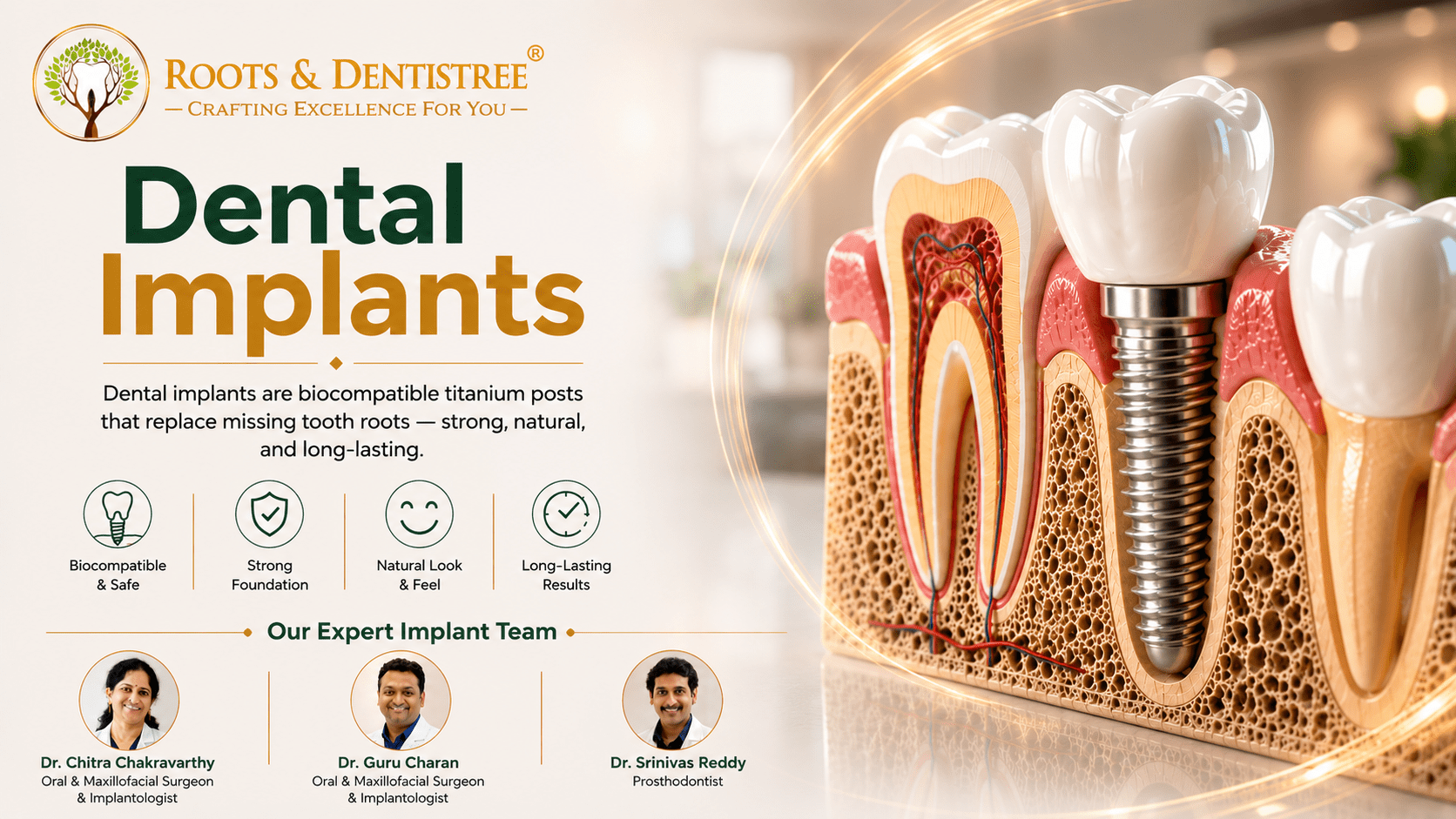
Dental implants are artificial tooth roots made from highly biocompatible materials, usually titanium. These implants are surgically placed into the jawbone, where they gradually integrate with the surrounding bone through a process known as osseointegration.
Once healing is complete, a custom-designed crown, bridge, or denture is attached to the implant. Consequently, the missing tooth is restored in a manner that closely mimics a natural tooth.
Because implants replace both the root and the visible portion of the tooth, they offer significant advantages over conventional replacement options.
Why Are Dental Implants Considered the Gold Standard?
Traditional bridges and removable dentures replace only the visible portion of missing teeth. However, dental implants also restore the underlying root structure.
As a result, implants help preserve jawbone health while maintaining facial support. Furthermore, they provide exceptional stability, thereby allowing patients to eat, speak, and smile with confidence.
Unlike removable dentures, implants do not shift or slip during daily activities. Therefore, many patients describe implant-supported teeth as feeling remarkably natural.
Who Is a Candidate for Dental Implants?
Most healthy adults with one or more missing teeth can be considered candidates for implant treatment. Nevertheless, a thorough clinical examination is essential before proceeding.
Adequate jawbone volume is important because implants require sufficient bone support. However, even patients with bone loss may still qualify after procedures such as bone grafting or sinus augmentation.
Additionally, maintaining good oral hygiene significantly contributes to long-term implant success.
The Dental Implant Procedure: Step-by-Step
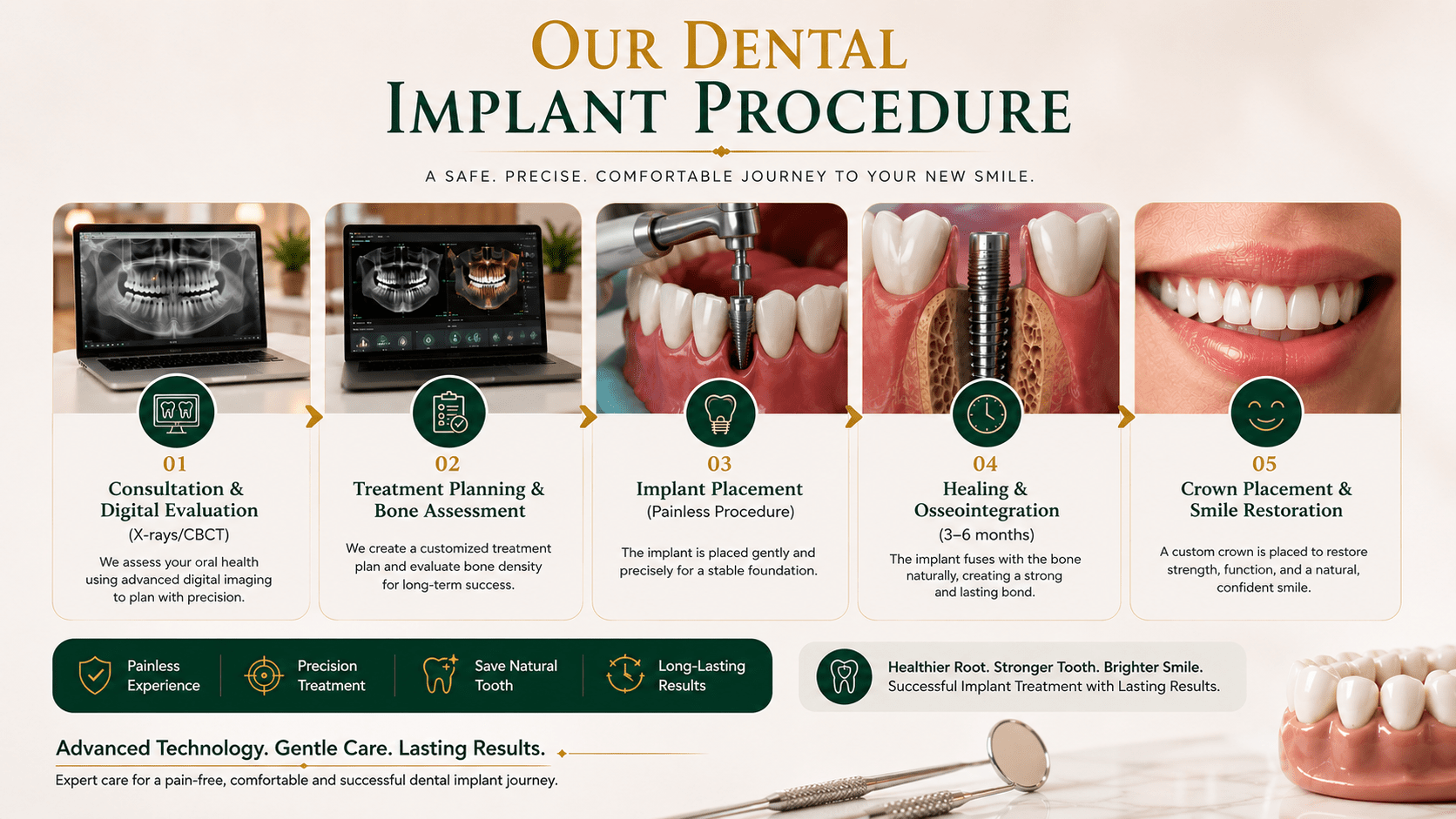
Understanding the treatment process often helps reduce anxiety and allows patients to make informed decisions.
Initial Consultation and Evaluation
The journey begins with a comprehensive examination that includes clinical assessment, digital scans, and radiographic evaluation. Subsequently, treatment planning is carried out based on the patient’s oral condition and expectations.
Advanced imaging technologies such as CBCT scans allow precise evaluation of bone quality and anatomical structures. Consequently, implant placement can be planned with exceptional accuracy.
Implant Placement Surgery
During the surgical phase, the titanium implant is carefully inserted into the jawbone under local anesthesia. Since modern surgical techniques are minimally invasive, the procedure is generally comfortable.
Following implant placement, a healing period is necessary to allow osseointegration to occur. During this stage, the implant gradually bonds with the surrounding bone, thereby creating a stable foundation.
Healing and Osseointegration
Healing times vary depending on individual circumstances. However, osseointegration typically requires approximately three to six months.
Throughout this period, temporary restorations may be provided whenever appropriate. Consequently, patients can often maintain normal aesthetics during treatment.
Final Restoration
Once healing is complete, impressions or digital scans are obtained to fabricate the final prosthesis. Subsequently, a custom-designed crown, bridge, or denture is attached to the implant.
The result is a restoration that closely resembles natural teeth in both appearance and function.
Types of Dental Implant Treatments
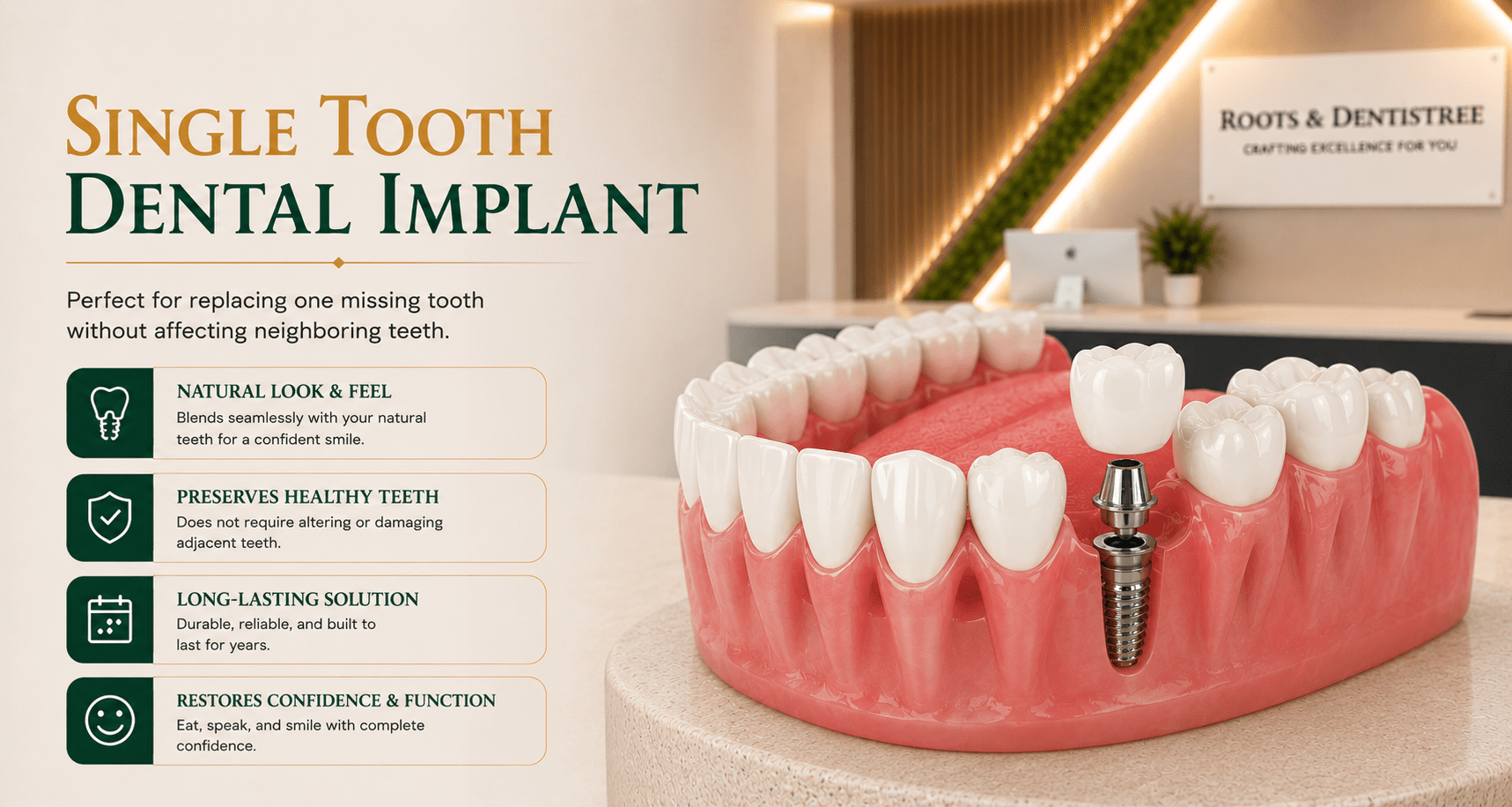
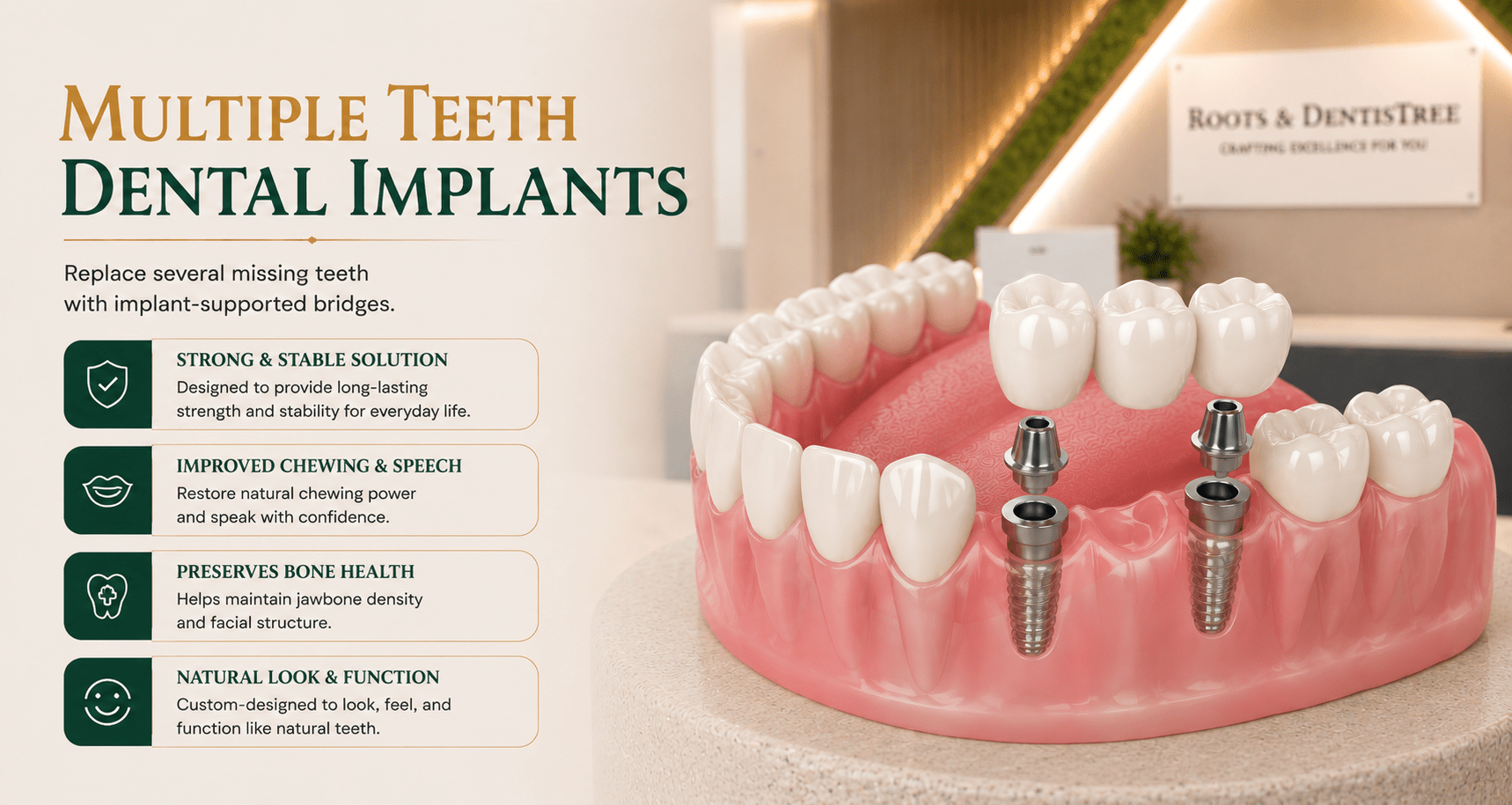
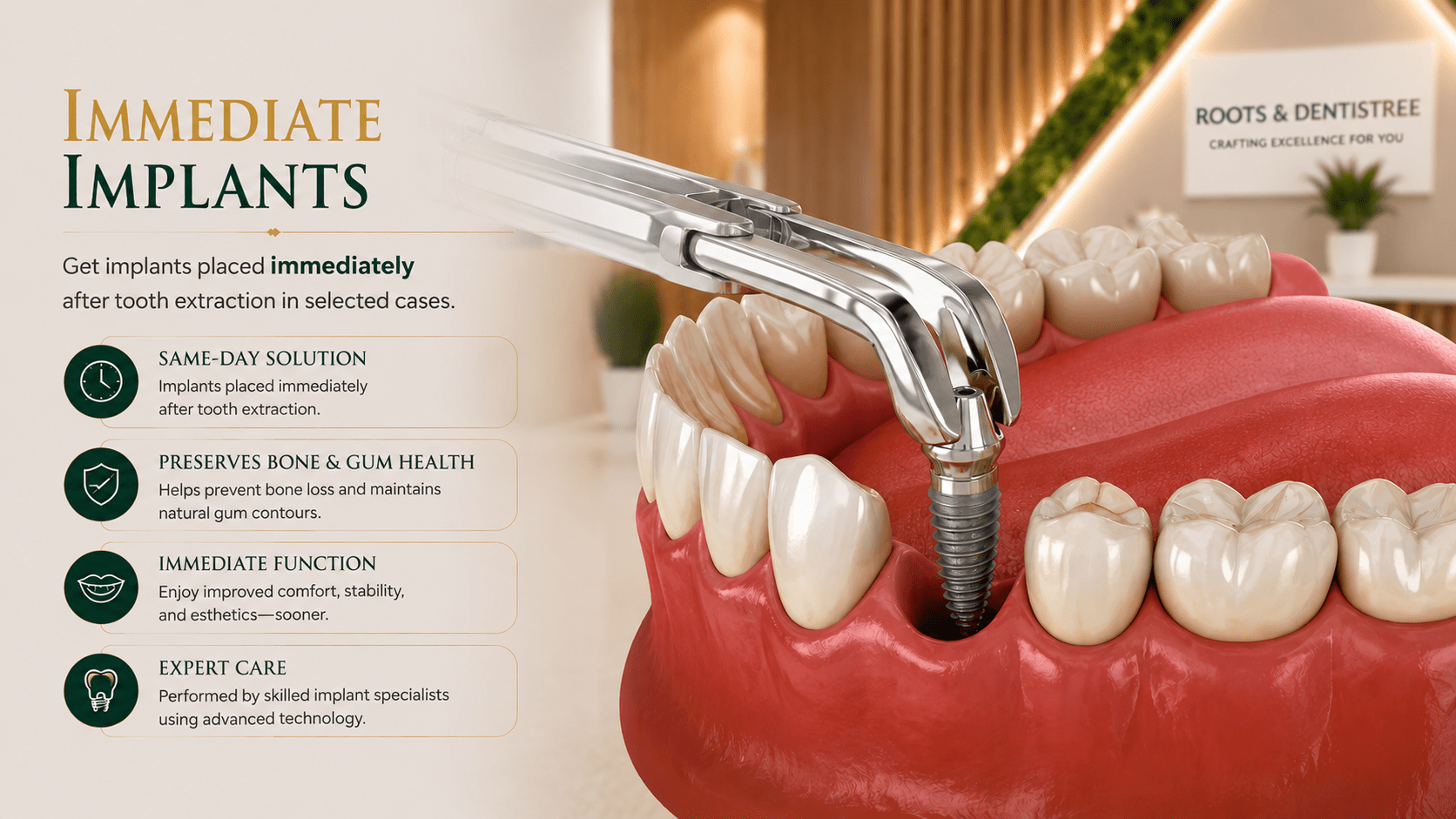
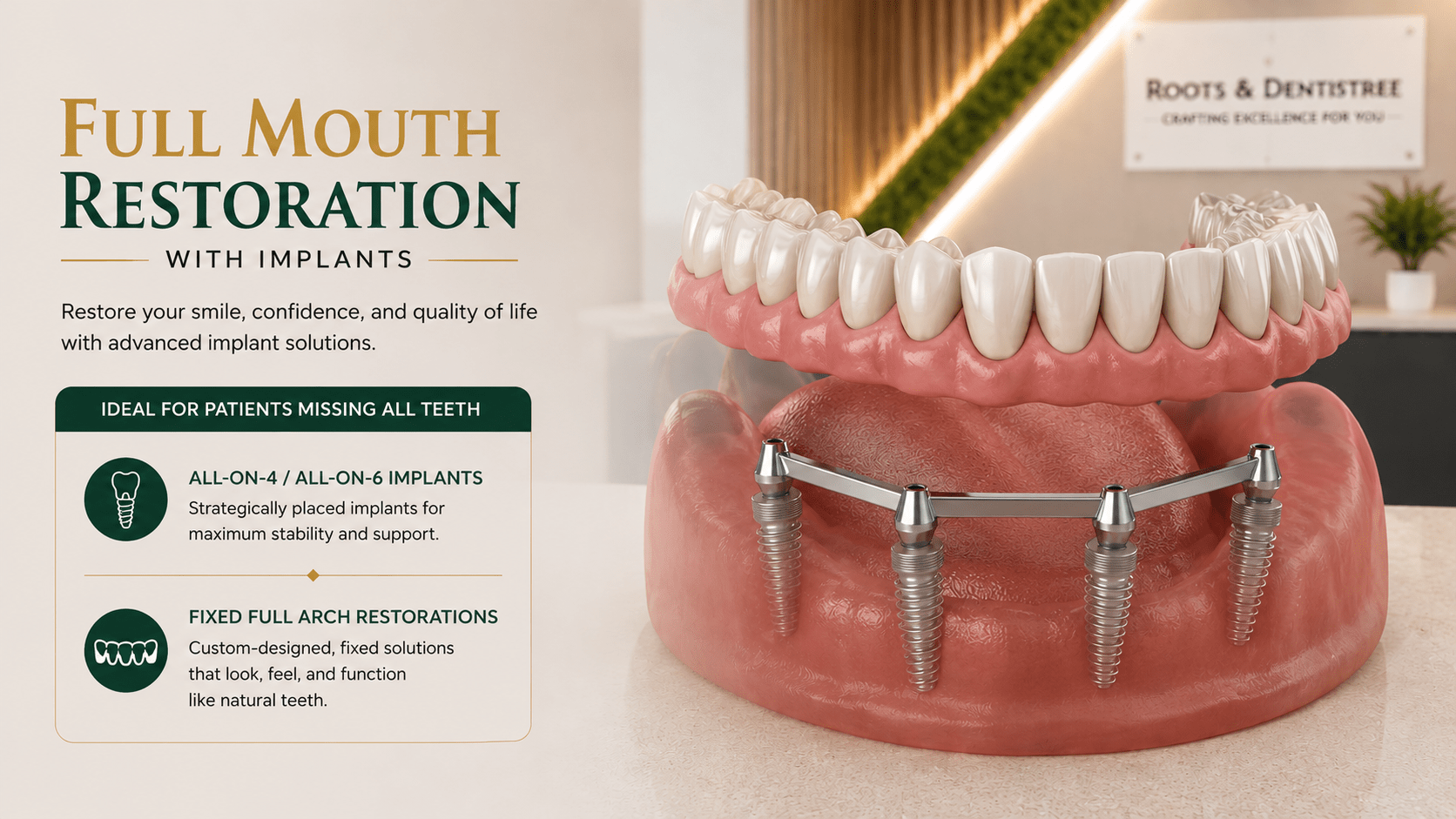
Dental implants can be used in a variety of clinical situations.
Single tooth implants are ideal when only one tooth is missing. In contrast, implant-supported bridges replace multiple missing teeth without relying on adjacent natural teeth.
For patients missing all teeth, full-arch rehabilitation solutions such as All-on-4 or All-on-6 implants provide fixed alternatives to conventional dentures.
Furthermore, implant-supported dentures offer enhanced stability and comfort compared to removable prostheses.
Benefits of Dental Implants
One of the greatest advantages of dental implants is their ability to preserve jawbone health. Since implants stimulate the bone similarly to natural tooth roots, bone loss is significantly reduced.
In addition, implants restore chewing efficiency, allowing patients to enjoy a wider variety of foods. Consequently, nutritional intake and quality of life often improve.
Moreover, implant restorations are highly aesthetic and blend seamlessly with natural teeth. As a result, patients frequently experience increased confidence and self-esteem.
Another important benefit is longevity. With proper care and maintenance, dental implants can remain functional for decades.
Dental Implants vs Bridges vs Dentures
Although bridges and dentures continue to be effective treatment options, dental implants offer several unique advantages.
Bridges require support from adjacent teeth. Therefore, healthy tooth structure may need to be modified.
Dentures, on the other hand, are removable and may become unstable over time due to progressive bone loss.
Dental implants eliminate both concerns because they function independently while preserving surrounding structures. Consequently, they are widely regarded as the most comprehensive tooth replacement solution available.
Are Dental Implant Procedures Painful?
Many patients are pleasantly surprised by how comfortable implant treatment can be.
The procedure is typically performed under local anesthesia, thereby ensuring a pain-free experience. Moreover, modern surgical protocols minimize post-operative discomfort.
Most patients report that recovery following implant surgery is easier than anticipated. Nevertheless, temporary soreness or mild swelling may occur during the initial healing period.
Dental Implant Cost in Hyderabad
One of the most common questions patients ask concerns the cost of dental implants in Hyderabad.
The final investment depends on several factors, including the implant system selected, the number of implants required, and whether additional procedures are necessary.
Estimated Dental Implant Cost in Hyderabad
Single Dental Implant (Implant + Crown):
₹30,000 – ₹65,000 per tooth
Premium International Implant Systems:
₹50,000 – ₹90,000 per tooth
Full Mouth Implant Rehabilitation:
₹3,50,000 – ₹12,00,000 or more
Implant-Supported Dentures:
₹1,50,000 – ₹6,00,000 depending on the number of implants
These price ranges represent approximate costs commonly observed in Hyderabad. However, a personalized consultation is essential to determine the exact treatment plan and investment.
Factors Affecting Dental Implant Cost
Several variables influence the overall cost of implant treatment.
The type and brand of implant system significantly impact pricing. For instance, internationally recognized premium implant brands generally involve higher costs.
Bone grafting or sinus lift procedures may also increase treatment expenses when additional bone support is required.
Furthermore, the complexity of the case, digital planning technologies, surgical expertise, and the type of final restoration all contribute to the final investment.
Consequently, individualized treatment planning remains essential.
Caring for Dental Implants
Maintaining dental implants is relatively straightforward. Regular brushing and flossing remain essential for preserving implant health.
In addition, routine professional examinations allow early detection of any concerns. Therefore, long-term success depends on consistent oral hygiene and periodic maintenance visits.
Patients should also avoid smoking whenever possible because tobacco use may compromise healing and implant longevity.
Why Choose ROOTS & DENTISTREE for Dental Implants?
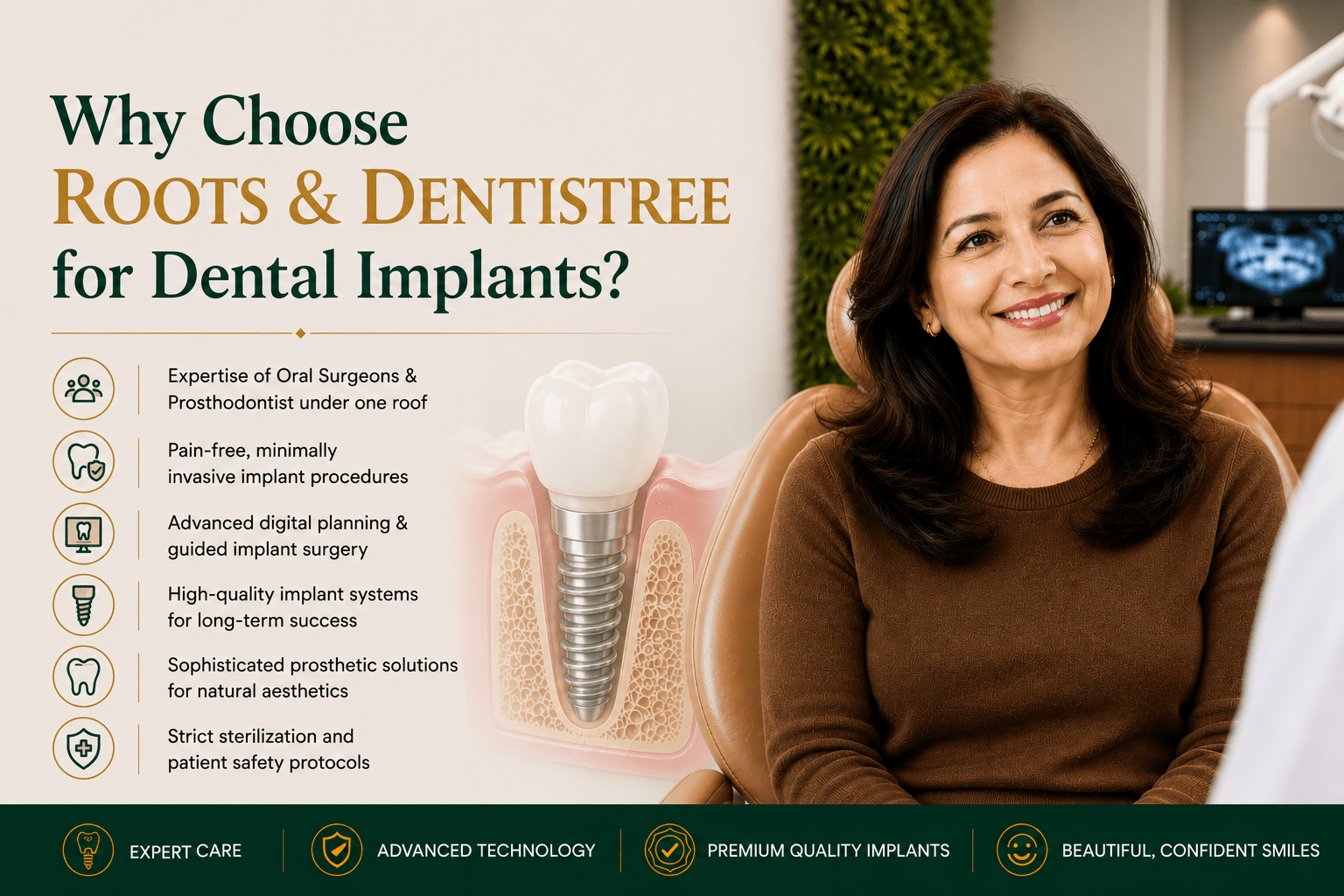
At ROOTS & DENTISTREE, implant treatment is delivered through a multidisciplinary approach involving experienced surgeons and restorative specialists.
Advanced diagnostic technologies, precise treatment planning, and patient-centered care ensure predictable outcomes. Consequently, patients receive comprehensive treatment tailored specifically to their individual needs.
The Final Verdict
Dental implants have transformed modern dentistry by offering a stable, aesthetic, and long-lasting solution for missing teeth.
Whether you are missing a single tooth or require full-mouth rehabilitation, implant therapy can restore not only your smile but also your confidence and quality of life.
Ultimately, the first step toward a healthier smile begins with a professional consultation and personalized treatment plan.
Frequently Asked Questions
With proper care and maintenance, dental implants can last for decades and, in many cases, a lifetime.
Yes. Dental implant treatment is a highly predictable and well-established procedure when performed by qualified professionals.
Treatment duration varies depending on individual circumstances; however, complete treatment often requires several months.
Smokers may still qualify for implant treatment, although smoking can increase the risk of complications and implant failure.
In many situations, implants provide superior stability, comfort, and function compared to removable dentures.